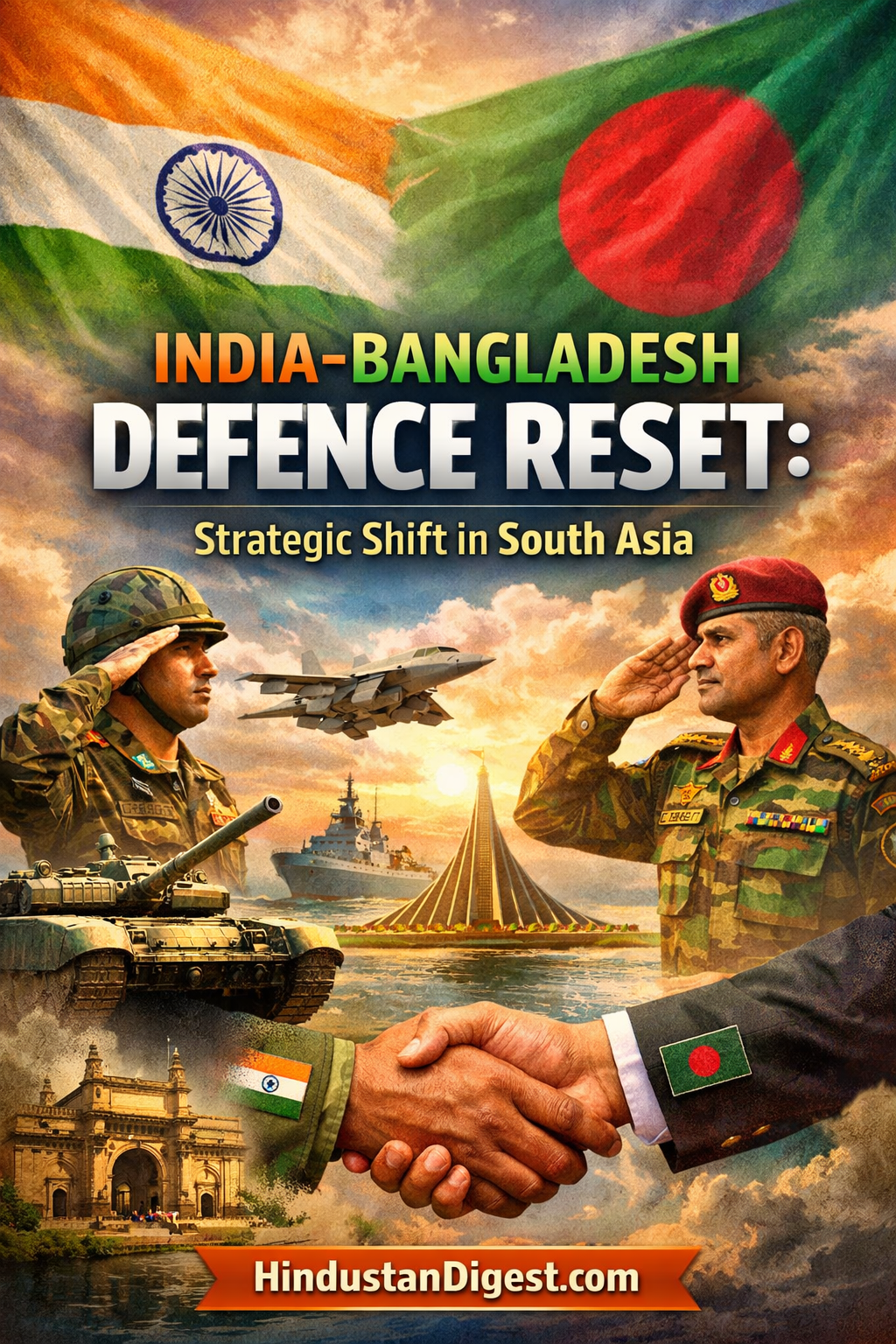
India–Bangladesh Defence Reset Signals Strategic Shift: From Diplomatic Strains to Renewed Regional Partnership.
India and Bangladesh are reviving defence ties after recent political shifts in Dhaka. Explore the historical roots, recent tensions, strategic reset, and future potential of Indo-Bangladesh relations in shaping South Asian stability.
India, Bangladesh Talk Defence Ties As Dhaka Moves Away From Yunus’ Pak Push
A Strategic Reset in South Asia
A recent high-level meeting between India’s Army leadership and Bangladesh’s envoy marks a significant turning point in bilateral relations. The discussions on strengthening defence cooperation reflect a broader diplomatic recalibration in Dhaka following political changes in 2026.
The meeting assumes greater importance because it signals a return to collaboration, after a period marked by strategic divergence under the interim administration led by Muhammad Yunus. With a new government in place, both nations appear committed to restoring trust and reinforcing their historically strong partnership.
This evolving dynamic is not merely bilateral, but deeply tied to the geopolitical stability of South Asia.
Historical Foundations of Indo–Bangladesh Relations
India and Bangladesh share one of the most unique relationships in the world, rooted in history, geography, culture, and shared sacrifice.
The foundation of this relationship was laid during the 1971 Bangladesh Liberation War, when India played a decisive role in supporting Bangladesh’s independence from Pakistan. India’s military intervention and humanitarian assistance helped shape the birth of Bangladesh as a sovereign nation. This shared history continues to influence bilateral ties even today.
Over the decades, the relationship evolved into a multidimensional partnership:
- Economic cooperation: India is one of Bangladesh’s largest trading partners
- Connectivity: Cross-border rail, road, and inland water links
- Energy collaboration: Power sharing agreements and grid connectivity
- People-to-people ties: Cultural, linguistic, and familial linkages across borders
The relationship has often been described as one of mutual interdependence, where both countries benefit from each other’s stability and growth.
Recent Strains: The Yunus Phase and Strategic Drift
Despite strong historical ties, the relationship experienced turbulence in the period following political upheaval in Bangladesh.
After the ouster of Sheikh Hasina in 2024, the interim government led by Muhammad Yunus adopted a foreign policy approach that created friction with India. Several developments contributed to this strain:
1. Tilt Towards Pakistan
The Yunus administration explored closer defence and strategic ties with Pakistan, including potential military cooperation and engagements.
2. Anti-India Rhetoric and Concerns
Statements by individuals close to the administration and perceived strategic positioning raised concerns in New Delhi about Bangladesh’s shifting alignment.
3. Diplomatic Frictions
Issues such as border management, water sharing, and political rhetoric added to the tensions, slowing down the otherwise strong bilateral momentum.
4. Broader Geopolitical Competition
External factors, including growing Chinese influence and regional power competition, further complicated the relationship.
This phase marked a temporary departure from the traditionally close India–Bangladesh partnership, raising concerns about long-term regional stability.
The 2026 Reset: Renewed Cooperation and Strategic Clarity
The political transition in Bangladesh in 2026, with the formation of a new elected government, has opened the door for resetting ties with India.
Recent developments indicate a clear shift:
- Revival of defence dialogue between the two countries
- Recognition of past setbacks and willingness to rebuild trust
- Reduced emphasis on Pakistan-centric engagement
- Focus on regional stability and mutual security interests
The meeting between Bangladesh’s High Commissioner and India’s Army Chief underscores this renewed intent to deepen cooperation.
Importantly, this reset reflects a broader understanding within Dhaka that strong ties with India are essential for economic growth, security, and regional influence.
Why This Reset Matters for South Asia
The improvement in India–Bangladesh relations carries implications beyond bilateral ties:
1. Regional Stability
A cooperative India–Bangladesh relationship reduces strategic vulnerabilities in eastern South Asia and counters destabilizing influences.
2. Security Cooperation
Joint efforts in counter-terrorism, border management, and intelligence sharing enhance security for both nations.
3. Economic Integration
Improved ties enable greater connectivity across South Asia, boosting trade corridors and regional supply chains.
4. Strategic Balance
A stable partnership helps balance competing influences from other regional and global powers.
Future Potential: A Partnership of Growth and Trust
Looking ahead, India and Bangladesh have immense potential to build a model bilateral relationship in the region.
1. Defence and Strategic Collaboration
Enhanced military cooperation, joint exercises, and defence technology sharing can strengthen mutual security.
2. Trade and Connectivity Expansion
Initiatives such as multimodal transport, border haats, and digital trade can unlock economic opportunities.
3. Energy and Infrastructure
Cross-border energy grids, renewable projects, and infrastructure development can drive sustainable growth.
4. Cultural and Educational Exchanges
Deepening people-to-people ties will continue to reinforce the emotional and historical bonds between the two nations.
5. Regional Leadership
Together, India and Bangladesh can play a leading role in revitalizing regional platforms like SAARC and BIMSTEC.
Conclusion: A Relationship Poised for Renewal
The recent defence dialogue between India and Bangladesh is more than a routine diplomatic engagement. It represents a strategic reset grounded in shared history and mutual interests.
While recent years saw moments of divergence, the current trajectory points toward renewed cooperation, pragmatic diplomacy, and long-term partnership.
India and Bangladesh stand at a pivotal moment where collaboration, not competition, will define the future. A strong and stable relationship between the two nations will not only benefit their citizens but also contribute significantly to peace, prosperity, and stability across South Asia.
Team – Hindustan Digest
More Featured Articles:
China+1 Strategy: Is India Truly Gaining Ground or Missing a Historic Opportunity?
Manipal Hospitals IPO: India’s Healthcare Giant Prepares for a ₹11,000 Crore Market Debut.
Why Kjøller Is an Important Venture Capital Investor for Startups Globally.
BSE Main Board Listed Company (Mumbai) Available for Strategic Acquisition.


One thought on “India–Bangladesh Defence Reset Signals Strategic Shift: From Diplomatic Strains to Renewed Regional Partnership.”