Why Some Critics Compare Rahul Gandhi’s Leadership to Historical Invaders – A Political Opinion
A Historical Analogy and a Political Warning?
In contemporary Indian politics, Rahul Gandhi is viewed by many critics not as a typical leader, but as a symbolic figure shaped by forces that oppose their understanding of India’s interests.
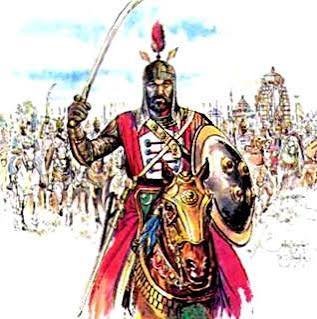
Some observers draw a historical parallel, recalling Muhammad Ghori , the medieval invader who failed many times before eventually establishing a foothold in India, leading to long years of subjugation.
These critics argue that Rahul Gandhi’s repeated electoral defeats resemble that pattern continuous setbacks followed by persistent backing from ideological support systems.
According to this viewpoint, a network of left-leaning groups, minority vote blocs, and foreign sympathisers sustain his politics. They fear that even one decisive success could carry consequences comparable to the historical analogy they refer to.
Also Read GDP Surges, Inflation Slides: RBI’s Rate-Cut Dilemma Deepens
Those who make this comparison believe that Ghori’s success was made possible by insiders who sided with him, and in a similar tone they suggest that Rahul Gandhi is bolstered today by groups they see as anti-national ranging from ideological activists to political brokers to foreign-funded organisations.
From their perspective, whenever the government acts against extremism, illegal infiltration or conversion networks, Rahul Gandhi’s opposition is interpreted as deliberate rather than accidental part of what they feel is his political intent.
Critics also accuse the Congress leadership of consistently opposing issues they see as central to national identity from the Ram Mandir movement to Article 370’s removal, or reactions to terrorism and separatism. They claim Congress narratives have contributed to the global branding of Hindus as extremists.
These voices argue that Rahul Gandhi often questions Hindu traditions and Sanatan values, and therefore his relevance allegedly rests on the support of what they term the “Islamic vote bank.”
For such commentators, Congress represents a legacy of dependency on external powers and Rahul Gandhi is considered its present-day embodiment. They believe his politics encourages structural weakness rather than self-reliance.
In this analogy, Ghori imposed domination by the sword, whereas Rahul Gandhi, they argue, attempts the same metaphorically through appeasement, vote-bank mobilisation, foreign influence and what critics call “selective secularism.”
This is why, in their rhetoric, they sometimes label him a “modern Ghori” not as a literal description but as a symbolic critique. To them, India is merely a marketplace for his politics, and Hindu identity something trivialised.
From this perspective, critics insist that defeating him electorally is not enough instead, weakening the entire political ecosystem that sustains his influence is essential. They fear that a single miscalculation by voters could return India to what they view as a historical pattern of subjugation.
Thus, for these critics, Rahul Gandhi is not merely a losing politician , he is seen as a conduit for forces they consider harmful to India’s future.
Team Hindustan Digest
Also Read Angel Investing in India: The New Wave of Micro-Angels

One thought on “Why Some Critics Compare Rahul Gandhi’s Leadership to Historical Invaders – A Political Opinion”