The Rise of Sanaenomics: Japan’s New Era of Resilience and Global Alliances.
Discover how Japanese PM Sanae Takaichi’s 2026 landslide victory and her “Sanaenomics” policy are reshaping the Indo-Pacific. A deep dive into Japan’s strategic shift away from China and toward deeper partnerships with India and Vietnam.
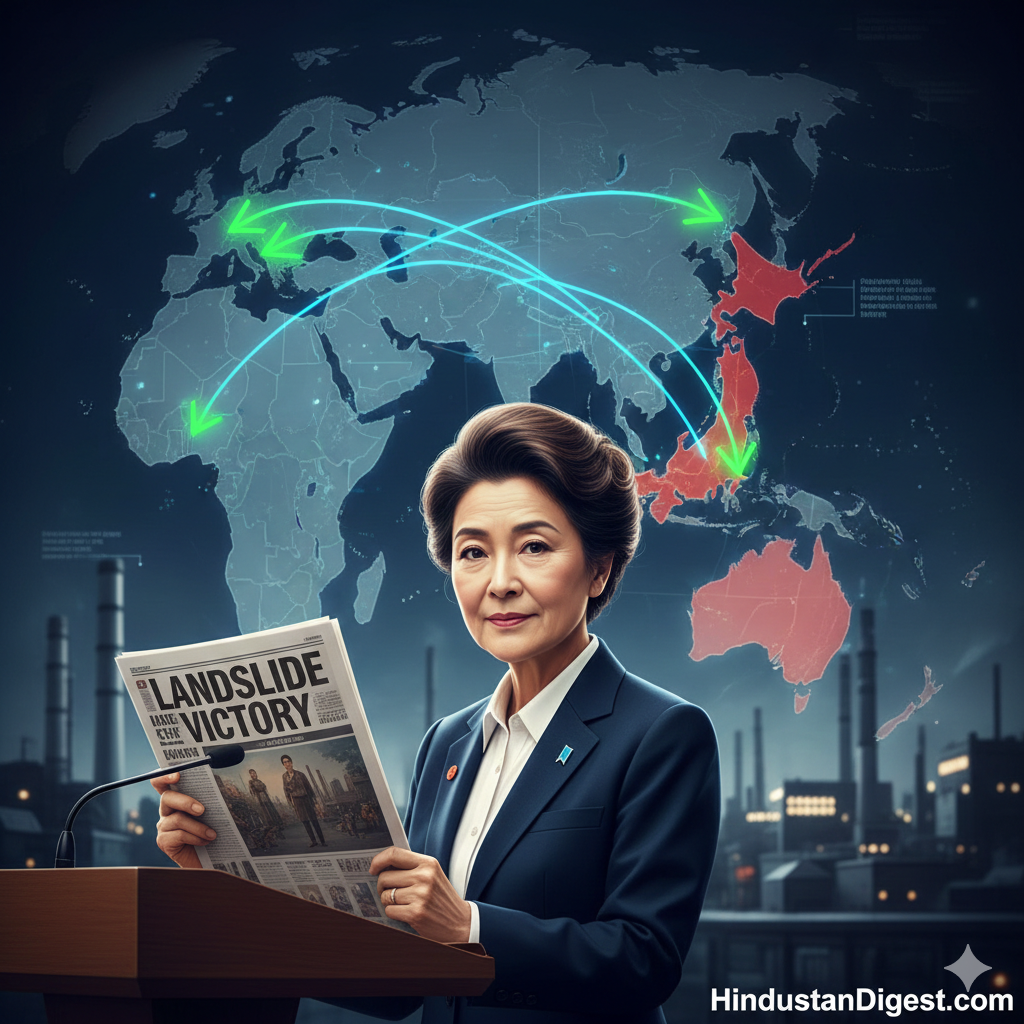
In a historic political shift, Japanese Prime Minister Sanae Takaichi has secured a landslide victory in the February 2026 snap elections. This “Iron Lady” of Japanese politics has not only cemented her leadership but has also been handed a powerful mandate to redefine Japan’s role in Asia and the global economy.
In a move that mirrors the boldest maneuvers of her mentor, the late Shinzo Abe, Prime Minister Sanae Takaichi’s gamble on a snap election has paid off with a resounding supermajority. By securing over 310 seats in the lower house, Takaichi has transitioned from an appointed successor to a popularly mandated leader. This victory signals the dawn of “Sanaenomics,” an economic and security doctrine designed to decouple Japan from Chinese influence while forging a high-tech “quasi-alliance” with emerging economies.
The Context: Why the Snap Election Mattered
Taking office in October 2025 as Japan’s first female Prime Minister, Takaichi faced a fractured Diet and a skeptical public. By calling for an election just four months into her tenure amidst heavy winter snowfall she sought to capitalize on her skyrocketing personal popularity (often called the “sanakatsu” phenomenon).
The mandate is clear: Japanese voters have prioritized national security and economic sovereignty over the status quo. The LDP’s victory is widely seen as a rejection of Beijing’s recent economic coercion, including bans on Japanese imports and gray-zone military activity.
Understanding “Sanaenomics”
Unlike its predecessor, Abenomics, which focused on the “three arrows” of monetary easing, fiscal stimulus, and structural reform, Sanaenomics is rooted in Economic Statecraft. Its core pillars include:
- Supply-Chain Diversification: A massive state-led investment to move critical manufacturing out of China.
- Technological Co-creation: Partnering with democratic allies to develop AI, semiconductors, and green energy.
- Defense-Led Growth: Accelerating defense spending to 2% of GDP by 2025, viewing military modernization as a catalyst for domestic industrial innovation.
The Beneficiaries: A New Strategic Map
The primary beneficiaries of Takaichi’s “Iron Lady” approach are Indo-Pacific partners who offer a reliable alternative to the Chinese market.
- India: Under Takaichi, the India-Japan relationship is expected to evolve from a “Special Strategic Partnership” to a “quasi-alliance.” New Delhi is poised to attract massive Japanese capital in infrastructure and defense technology.
- Vietnam and ASEAN: Vietnam stands as a primary destination for Japanese firms “de-risking” from China, benefiting from Takaichi’s focus on supply-chain resilience.
- The United States: With a strong endorsement from President Donald Trump, Takaichi’s win reinforces the U.S.-Japan security axis, particularly regarding the stability of the Taiwan Strait.
The Strategic Setback: Who Loses?
The clear loser in this shift is Beijing. Takaichi’s refusal to back down on issues of sovereignty and her vocal support for Taiwan have already triggered diplomatic friction. Her landslide victory means Japan will likely:
- Harden its stance on technology transfers to China.
- Lead a regional coalition to counter economic bullying.
- Formalize more robust security ties with “The Quad” (U.S., India, Australia).
Future Implications
Looking ahead, the Takaichi administration faces the challenge of balancing aggressive fiscal spending with Japan’s massive debt. However, with a two-thirds majority, she has the “strategic license” to pass controversial bills that previous leaders could not. As Japan pivots toward a more assertive “Japan First” conservative agenda, the region should prepare for a Tokyo that is not just a follower of global trends, but a primary architect of a new, China-independent Asian order.
Team – HindustanDigest.com
More Featured Articles:
Trump Planning New “Superclub” With India? Inside the Buzz Around a Potential Core-5 Power Grouping.
Can India Catch Up with the US, Taiwan and China in the Global Chip Race?
How Did China’s Trade Surplus Hit $1 Trillion? Key Drivers Behind the Historic Surge
Why MSMEs Trust Us With Their Most Critical Financial Decisions
Satellite Deception and Nuclear Mobility: China’s Use of Civilian Disguise for ICBM Launchers
The Mother of All Deals: Decoding the Historic India-Europe Free Trade Agreement of 2026.