The 2026 Verdict: Why the ‘Maharashtra Elections Spelled the End for India’s Political Dynasties
Analysis of the 2014–2026 election cycle:
How the Indian voter in the Bihar 2025 and Delhi 2025 elections finally dismantled the “Political Prince” culture. Discover why merit is the new currency in India’s maturing democracy.
For decades, Indian politics was a game of musical chairs played by a few elite families. Whether it was the high-table of Delhi or the grassroots of Bihar and Maharashtra, a famous surname was often more valuable than a decade of public service. But as we stand in January 2026, looking back at the “Mahabharata” elections of the past year, it is clear: The Indian voter has finally served an eviction notice to the Dynasts.
The Decade of Disruption: 2014 to 2026
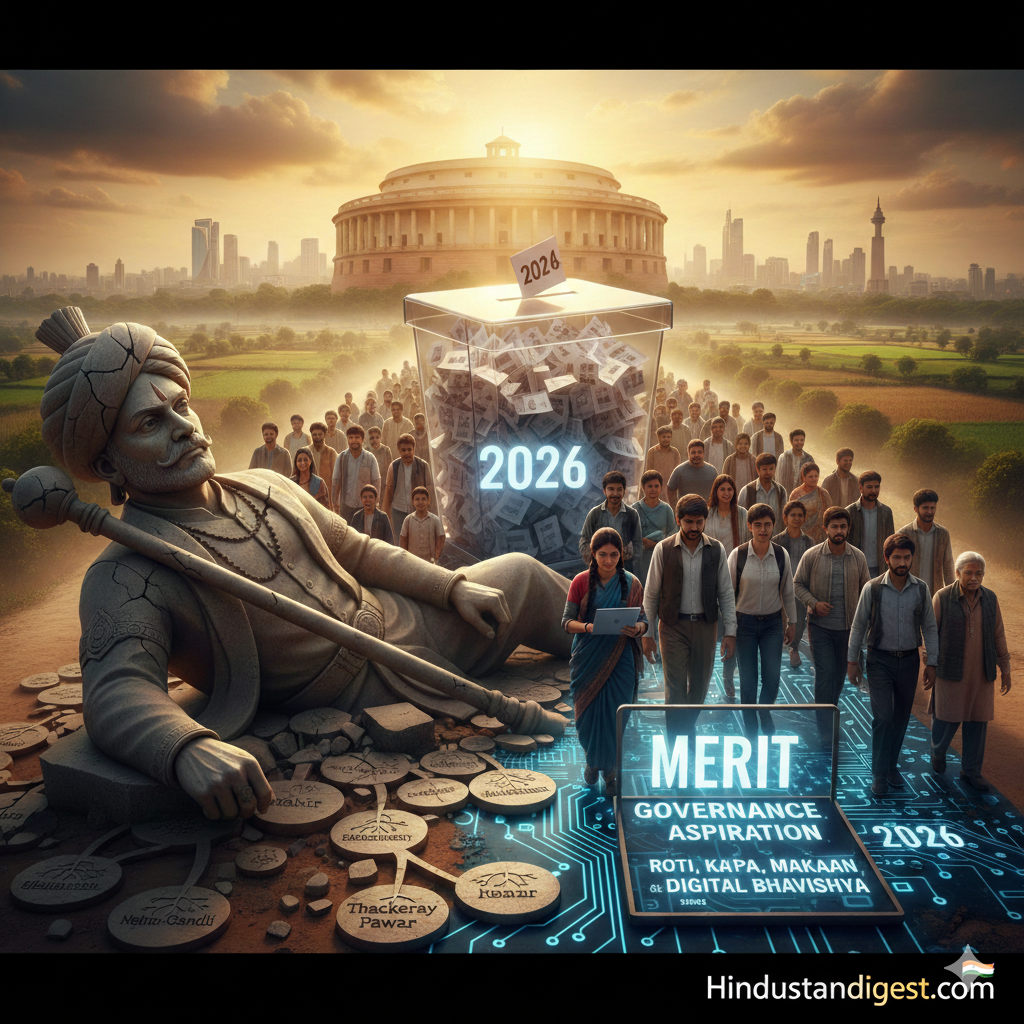
The journey from 2014 to 2026 represents the most significant psychological shift in the history of the Indian Republic. We have moved from being a “Subject” of families to a “Citizen” of a meritocracy.
- 2014–2019 (The National Warning): The first phase saw the dismantling of the Nehru-Gandhi monopoly at the center. The narrative shifted from “What my grandfather did” to “What I will do today.”
- 2024 (The Reality Check): While many thought dynasties might make a comeback through regional alliances, the results showed that “Brand Legacy” was failing to find new buyers among Gen-Z and Millennial voters.
- 2025-2026 (The Mahabharata Collapse): The recent results in Bihar and Delhi have been the final nail in the coffin for Parivarvad (Dynasticism).
Also Read: Why US Lawmakers Should Respect India’s Sovereignty and Independent Judiciary:
The Great Dusting: Two Prominent Bastions Crumble
In the recent state-level “Maharashtra,” two major dynasties, families that considered their states their private property—were effectively “dusted” by the common man.
- The Bihar Rejection (2025): The RJD-led Mahagathbandhan, built on the pillars of legacy and the “Yadav-Muslim” formula, met a crushing defeat. Despite Tejashwi Yadav’s high-decibel campaign, the NDA secured a massive 202-seat mandate. The youth of Bihar chose the “10th term” of governance and development over the promise of a returned “legacy.”
- The Delhi Shift (2025): Even in the national capital, the rejection of “entitlement” was evident. The BJP’s victory in Delhi after 26 years proved that voters are looking for a “Triple Engine” of growth, leaving legacy-driven opposition parties in the wilderness.
Critical Analysis: Why the ‘Prince’ is Failing
1. The Death of Identity-First Voting
The voter of 2026 is an Aspirational Consumer. They don’t care about the sacrifices of the 1970s; they care about 5G connectivity, startup ecosystems, and the “Digital Bhavishya” (Digital Future). In Bihar, the NDA’s victory was powered by the Mahila (Women) and Yuva (Youth) vote—groups that prioritized ₹10,000 in their accounts via direct transfer over a dynasty’s historical narrative.
2. The Credibility Gap: Entitlement vs. Effort
Dynasts often operate within a “Sycophant Bubble.” They are surrounded by people who tell them they are “Natural Leaders.” This prevents them from seeing the ground reality. When a self-made leader talks about Roti, Kapda, Makaan along with Digital Progress, the Dynast’s talk of “Family Heritage” sounds hollow and outdated.
3. The Fragility of Family Parties
A political party run like a family business is inherently unstable. As seen in the splits within the Shiv Sena and NCP in Maharashtra, the “employees” (party workers) eventually realize they can never become the “CEO” because that seat is reserved for the founder’s son. This realization has triggered a mass exodus of talent from dynastic parties toward meritocratic ones.
Also Read: Trump Planning New “Superclub” With India? Inside the Buzz Around a Potential Core-5 Power Grouping.
The Democratic Imperative: Why Merit Must Win
A democracy thrives when the daughter of a tea-seller or the son of a farmer can aspire to lead the nation. When dynasties dominate, they create a glass ceiling that stifles fresh ideas.
”Democracy is not a baton to be passed in a family relay; it is a throne to be earned in the arena of public service.”
The 2025-2026 results are a triumph of the Common Man’s Merit over the Dynast’s Surname. The “Mahabharata” of these elections wasn’t just between parties; it was a war between the Old India of entitlement and the New India of performance.
Conclusion
As we look toward the upcoming polls in West Bengal and Tamil Nadu later in 2026, the message is written on the wall. The Indian voter is no longer a silent spectator to “Family Rule.” They are an active, demanding, and ruthless judge. To the dynasties that remain: The crown is no longer a birthright. In the India of 2026, you either deliver, or you disappear.
Team: Hindustandigest.com
More Featured Articles:
SME IPOs in India: Insights from Regulators, Bankers & Advisors
Ultimate Guide to Early Stage Startup Funding in MENA (2026): Top Investors & Strategies
Strategic Finance Options for Medical and Hospital Businesses in India (2026)